Blog

GA-map Technical Spotlight

This week Eagle Biosciences is highlighting a revolutionary test in the microbiome industry. The GA-map® Dysbiosis Test Lx was developed by Genetic Analysis in Norway. The GA-map ® is a tool that allows mapping of the intestinal microbiota profile for a selected set of bacteria in a sample. The test is based on advances in DNA profiling using probes targeting variable regions (V3 to V7) of the bacterial 16S rRNA gene to characterize and identify bacteria present. The targets are identified in a molecular multiplex assay that utilizes the Single Nucleotide Primer Extension (SNuPE) technology patented by professor Knut Rudi of the Norwegian University of Life Sciences (​NMBU) (US6617138). A unique algorithm takes advantage of all the data generated by the detection of the SnuPE products to determine the microbiota profile in the sample. The algorithm is incorporated in the GA-map® Dysbiosis Analyzer software that accompanies the test.

Check out this video for a quick overview of the GA-map ® Dysbiosis Test Lx Platform equipment and techniques.

Note: This test is for research use only and not to be used for diagnostic procedures


If you have any questions about the GA-map® Dysbiosis Test Lx or our other offerings contact us here.

iLite Assay Ready Cells Product Spotlight

One of our supplier’s was recently featured in an editorial by Select Science! Svar Life Sciences has been working closely with Dr. Erik Tillman at Akero Therapeutics. Tillman and his team are developing a multi-modal drug that could help treat the drivers of non-alcoholic steatohepatitis (NASH), a severe form of non-alcoholic related fatty liver disease (NAFLD) that has increased risk for cardiovascular and liver related morbidity and mortality. Him and his team have been working with Svar to create custom iLite assay-ready cells for the cell-based assays that have become a key role in the work Tillman and his teammates perform daily.

“The assay-ready cells have been much more robust and the results have been more reproducible than other cell-based assays that we had tried to use or develop in the past,” says Tillman. “Using the assay-ready cells from Svar, we understand how the cells have been made and characterized, and we are confident in how the cells are going to perform from one vial to the next, and from one lot to the next. Svar’s expertise in the engineering of the cell system and our results thus far have given us the confidence to broaden our use of the assay-ready cells.”

Click here to read the full editorial about Dr. Tillman’s research and the role of Svar’s iLite assay-ready cells.


If you have any questions about Svar’s iLite Assay Ready Cells or our other offerings contact us here.

Mouse Rat 25-OH Vitamin D ELISA Highlighted in Recent Publication

The Eagle Bioscience’s Mouse Rat 25-OH Vitamin D ELISA was recently highlighted about how the MicroRNA-122 contributes to lipopolysaccharide-induced acute kidney injury via down-regulating the vitamin D receptor in the kidney.

Abstract


Background
Our previous studies showed that vitamin D receptor (VDR) depletion promotes lipopolysaccharide (LPS)-induced acute kidney injury (AKI) in mice, and renal VDR is down-regulated in AKI, but the mechanism of VDR down-regulation is unclear.

Methods
Nutritional vitamin D deficiency was induced by feeding mice a vitamin D-deficient (VD-D) diet. Mice were injected intraperitoneally with LPS (20 mg/kg) to establish LPS-induced AKI. Levels of VDR and miR-122 were measured both in vivo and in vitro. The associations between VDR and miR-122 were analysed by dual-luciferase reporter assays.

Results
Compared with vitamin D-sufficient (VD-S) mice, VD-D mice developed more severe renal injury following LPS challenge. LPS induced a dramatic decrease in VDR expression and marked induction of miR-122 both in vivo and in vitro. Furthermore, miR-122 hairpin inhibitor alleviated LPS-induced VDR down-regulation whereas miR-122 mimic directly suppressed VDR expression in HK-2 cells. In luciferase reporter assays, miR-122 mimic was able to suppress luciferase activity in 293T cells co-transfected with a luciferase reporter that contains a putative miR-122 target site from 3′UTR of the VDR transcript, but not when this site was mutated. Moreover, miR-122 mimic significantly blocked paricalcitol-induced luciferase activity in 293T cells co-transfected with a VDRE-driven luciferase reporter, whereas miR-122 hairpin inhibitor enhanced paricalcitol’s activity to suppress PUMA and caspase 3 activation induced by LPS in HK-2 cells.

Conclusions
Collectively, these studies provide evidence that miR-122 directly targets VDR in renal tubular cells, which strongly suggest that miR-122 up-regulation in the kidney under LPS challenge contributes to kidney injury by down-regulating VDR expression.

He, J., Du, J., Yi, B., et al. MicroRNA-122 contributes to lipopolysaccharide-induced acute kidney injury via down-regulating the vitamin D receptor in the kidney. European Journal of Clinical Investigation. (2021) Full Text Here.


If you have any questions about the Mouse Rat 25-OH Vitamin D ELISA or our other offerings, contact us here.

Endostatin Biomarker Spotlight
Endostatin is an endogenous angiogenesis inhibitor localized in the vascular basement membrane in various organs. The biological functions of the endostatin-network involve SPARC, thrombospondin-1, glycosaminoglycans, collagens, and integrins. Endostatin is expressed during the progression of renal fibrosis in tubular cells of injured tissue.

A recent study aimed to discover the role of endostatin in in the dysregulation of angiogenesis in patients with kidney and heart failure. Scientists found that due to its capability to inhibit angiogenesis and tumor growth, endostatin is highly involved in these processes in chronic kidney disease and heart failure. Since endostatin is not just a biomarker of angiogenesis but also a hormone regulating these processes, pharmacologic intervention in this system might offer new therapeutic options in the future.

Li M, Popovic Z, Chu C, Krämer B, K, Hocher B: Endostatin in Renal and Cardiovascular Diseases. Kidney Dis 2021. doi: 10.1159/000518221 Full Text Here.


Eagle Biosciences offers a robust assay for the measurement of endostatin in human samples, the Endostatin ELISA Assay Kit. The benefits of this assay include:

  • for serum, plasma, and urine samples
  • SIMPLE analysis – results in 4.5 h
  • LOW SAMPLE VOLUME – only 20µl sample / well
  • HIGH QUALITY – fully validated assay according to ICH/FDA/EMEA

We also offer a Mouse/Rat Endostatin ELISA Assay Kit for other testing needs.


If you have any other questions about these products or our other offerings, contact us here.

EagleBio Visits AACC in Atlanta Georgia

Eagle Biosciences will be at AACC in Atlanta Georgia!

AACC is next week, Sunday September 26th – Thursday September 30th, at the Georgia World Congress Center. Stop by booth #3036 to learn more about the GA-Map Dybiosis Test Lx and Cov19 FluoBolt-DAT and other assays that could help you with your microbiome or COVID-19 research! We will be there to answer any questions you may have, or stop and say hi! We love seeing our customers!


Product Highlights

GA-Map Dysbiosis Test Lx: The first and only standardized solution for microbiome profiling! The GA-Map Dysbiosis Test Lx is a simple multiplex stool assay that identifies 48 bacterial markers. All reagents and required software are included in the kit, and it is designed to be run for routine testing.

Cov19 FluoBolt-DAT: This newest addition to our FluoBolt line of assays is a duplex antibody test. This assay is intended for the simultaneous detection of anti-nucleocapsid antibodies and anti-S1 RBD antibodies to SARS-CoV-19. This is a valuable tool for evaluating immunity against SARS-CoV-2 acquired through infection as well as vaccination.


If you have any other questions about these products or our other offerings, contact us here.

Vanin-1 Biomarker Spotlight

Vanin-1 (VAN1) is an anchored protein that catalyzes the hydrolysis of pantetheine to pantothenic acid (vitamin B5) and cyteamine. VAN1 has a broad tissue expression with the highest levels being observed in kidney tubular epithelial cells. The GPI anchor of VAN1 can be cleaved by a yet unknown mechanism, resulting in VAN-1 being shed into the extracellular space.

Vanin-1 plays a pivotal role in oxidative stress and the inflammatory response. However, its relationship with traumatic sepsis remains unknown. In a study aimed to identify whether VAN1 could be used as a biomarker for traumatic sepsis, scientists found there is a significant relationship between plasma VAN1 and sepsis in both the internal test cohort and the external validation cohort. These results contribute to the body of evidence supporting the use of plasma VAN1 in the early prediction of traumatic sepsis.

Learn more about that study here.


Eagle Biosciences offers a comprehensive Vanin-1 ELISA for urine samples.

Vanin-1 ELISA Assay Highlights

  • Optimized for human urine samples
  • Highly SPECIFIC and DEFINED characterized antibodies
  • RELIABLE – rigorously validated
  • QUICK one-step ELISA

We also provide a Vanin-1 Mouse/Rat ELISA Assay Kit that has been validated for mouse or rat serum, plasma, or urine samples.


If you have any questions about this product or our other offerings, contact us here.

At this time it is unknown for how long antibodies persist following infection or vaccination, and if the presence of antibodies confers protective immunity. Antibodies to SARS-CoV-2 are generally detectable in blood several days after initial infection or vaccination, although the duration of time antibodies are present post-infection or post-vaccination is not well characterized. Individuals may have detectable virus present for several weeks following seroconversion.

The Cov19 FluoBolt-DAT test, manufactured in Austria by Fianostics GmbH, is a duplex antibody test that is intended to identify individuals with an adaptive immune response to SARS-CoV-2, indicating recent or prior infection or vaccination. There is a high demand to know how protected populations are after COVID-19 onset or vaccination, this test is the next step in identifying immunity.


How the Cov19 FluoBolt-DAT Test Works

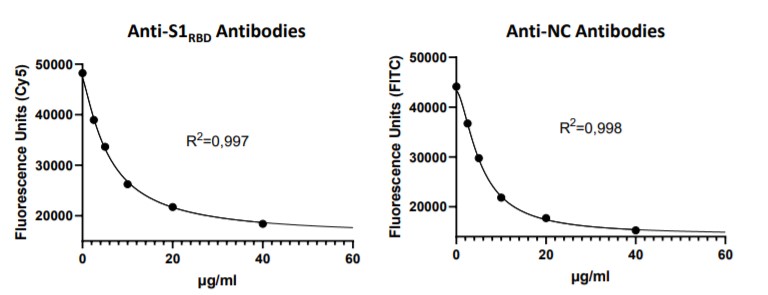
When performing the assay, 10 µl of a patient serum or plasma sample are simultaneously mixed with 50 µl of two different fluorescence-labeled tracer antibodies against the S1RBD and against the NC protein and incubated in our special fluorescence-enhancing microtiter plate for 60 minutes. By measuring at 2 different wavelengths, their displacement by homologous antibodies from the patient sample is determined simultaneously. The signals at one wavelength provide information about the concentration of anti-S1RBD antibodies. The signals at the other wavelength indicate the concentration of anti-nucleocapsid antibodies.

By using the supplied calibrators, a calibration curve for the anti-S1RBD and the antiNC antibodies is constructed, and the antibody concentration of a patient sample is read from it. With just a single measurement, this results in a quantitative determination of these
two antibody species against SARS-CoV-2, which represent the majority of the immune response and may protect against infection and illness.

Cov19 FluoBolt-DAT Test Standard Curves
For measurement, any commercially available fluorescence microtiter plate reader can be used.

Click here to learn more about the Cov19 FluoBolt-DAT test.


If you have any questions about this kit or our other offerings, contact us here.

COVID-19 IgM

The Eagle Bioscience’s Coronavirus COVID-19 IgM ELISA Assay Kit was recently highlighted in a publication about a review on current diagnostic techniques for COVID-19. This review includes techniques such as RT-PCR, ddPCR, LAMP, CRISPR, and immunoassay techniques. To learn more about this publication, read below:

Abstract


Introduction
SARS-Cov-2 first appeared in Wuhan, China, in December 2019 and spread all over the world soon after that. Given the infectious nature of SARS-CoV-2, fast and accurate diagnosis tools are important to detect the virus. In this review, we discuss the different diagnostic tests that are currently being implemented in laboratories and provide a description of various COVID-19 kits.

Areas Covered
We summarize molecular techniques that target the viral load, serological methods used for SARS-CoV-2 specific antibodies detection as well as newly developed faster assays for the detection of SARS-CoV-2 in various biological samples.

Expert Opinion
In the light of the widespread pandemic, the massive diagnosis of COVID-19, using various detection techniques, appears to be the most effective strategy for monitoring and containing its propagation.

Jaddaoui, IE., Allali, M., Raoui, S., et al. A review on current diagnostic techniques for COVID-19. Expert Review of Molecular Diagnostics. (2021) 21:2, 141-160.


If you have any questions about this Coronavirus COVID-19 IgM ELISA Assay Kit or our other products, contact use here!

The Eagle Bioscience’s TNF-Alpha ELISA Assay Kit was recently utilized in a publication about the detection rate and genotyping of Cryptosporidium spp. and its relation to corporate TNF-Alpha in elderly Egyptians.

Abstract


Background
Elderly individuals are considered an at-risk population, susceptible to enteric infections; and Cryptosporidium spp. is an apicomplexan protozoan considered to be one of the most common protozoa causing diarrhea. Cryptosporidiosis causes elevation of many pro-inflammatory cytokines like tumor necrosis factor-alpha (TNF-α) which may play a role in pathogenesis of the disease.

Objectives
This study was designed for detection and genotyping of Cryptosporidium spp. in elderly patients and the relationship of infection with copro TNF-α. Diagnosis was by evaluation of permanent acid-fast cold Kinyoun’s (AF) staining, immunochromatographic detection (ICT), and ELISA in comparison to molecular diagnosis as gold standard diagnostic method.

Subjects and Methods
Stool samples were collected from 270 elderly patients aged above 60 years old attending outpatient clinics of Internal Medicine Hospital, Cairo University. Sample were examined microscopically by direct wet mount, and AF straining, and then subjected to ICT ELISA and nested PCR (nPCR) assays. Positive samples by nPCR were then subjected to Restriction fragment length polymorphism (RELP) to detect Cryptosporidium genotypes. Corpo-levels of TNF-Alpha were measured to asses their relationship with cryptosporidiosis.

Results
Cryptosporidiosis detection rates of 3.7%, 6.3%, 6.7%, 3.7% were determined by microscopic examination after AF staining, ICT, ELISA and nPCR, respectively. When RFLP was performed on nPCR positive samples, eight and two samples were assigned as genotype 1 and 2, respectively. Moreover, TNF-α was significantly correlated with cryptosporidiosis.

Conclusion
Conclusion: The elderly are highly vulnerable to cryptosporidiosis. Immunodiagnosis and molecular techniques are fundamental for the diagnosis of cryptosporidiosis. Cryptosporidiosis significantly affects copro TNF-α.

Amin, NM., Raafat, A., Morsy, SM. Detection rate and genotyping of Cryptosporidium spp. and its relation to copro TNF-α in elderly Egyptians attending outpatient clinics of Cairo University Hospitals. Parasitologists. (2021)14:77-85


If you have any questions about this product or our other offerings, contact us here.

Anti-Infliximab ELISA

The Eagle Bioscience’s Anti-Infliximab ELISA Assay Kit was recently highlighted in a publication about factors that are associated with reduced infliximab exposure in the treatment of pediatric autoimmune disorders.

Abstract


Background
Inadequate systemic exposure to infliximab (IFX) is associated with treatment failure. This work evaluated factors associated with reduced IFX exposure in children with autoimmune disorders requiring IFX therapy.

Methods
In this single-center cross-sectional prospective study IFX trough concentrations and anti-drug antibodies (ADAs) were measured in serum from children diagnosed with inflammatory bowel disease (IBD) (n = 73), juvenile idiopathic arthritis (JIA) (n = 16), or uveitis (n = 8) receiving maintenance IFX infusions at an outpatient infusion clinic in a tertiary academic pediatric hospital. IFX concentrations in combination with population pharmacokinetic modeling were used to estimate IFX clearance. Patient demographic and clinical data were collected by chart review and evaluated for their relationship with IFX clearance.

Results
IFX trough concentrations ranged from 0 to > 40 μg/mL and were 3-fold lower in children with IBD compared to children with JIA (p = 0.0002) or uveitis (p = 0.001). Children with IBD were found to receive lower IFX doses with longer dosing intervals, resulting in dose intensities (mg/kg/day) that were 2-fold lower compared to children with JIA (p = 0.0002) or uveitis (p = 0.02). Use of population pharmacokinetic analysis to normalize for variation in dosing practices demonstrated that increased IFX clearance was associated with ADA positivity (p = 0.004), male gender (p = 0.02), elevated erythrocyte sedimentation rate (ESR) (p = 0.02), elevated c-reactive protein (CRP) (p = 0.001), reduced serum albumin concentrations (p = 0.0005), and increased disease activity in JIA (p = 0.009) and IBD (p ≤ 0.08). No significant relationship between diagnosis and underlying differences in IFX clearance was observed. Multivariable analysis by covariate population pharmacokinetic modeling confirmed increased IFX clearance to be associated with anti-IFX antibody positivity, increased ESR, and reduced serum albumin concentrations.

Conclusions
Enhanced IFX clearance is associated with immunogenicity and inflammatory burden across autoimmune disorders. Higher systemic IFX exposures observed in children with rheumatologic disorders are driven primarily by provider drug dose and interval selection, rather than differences in IFX pharmacokinetics across diagnoses. Despite maintenance IFX dosing at or above the standard recommended range for IBD (i.e., 5 mg/kg every 8 weeks), the dosing intensity used in the treatment of IBD is notably lower than dosing intensities used to treat JIA and uveitis, and may place some children with IBD at risk for suboptimal maintenance IFX exposures necessary for treatment response.

Funk, RS., Shakhnovich, V., Cho, YK., et al. Factors associated with reduced infliximab exposure in the treatment of pediatric autoimmun disorders: a cross-sectional prospective convenience sampling study. Pediatric Rheumatology. (2021) 19:62


If you have any questions about the Anti-Infliximab ELISA Assay Kit or our other offerings, contact us here.