
SAP ELISA Kit
Serum amyloid P component (SAP) is a highly conserved member of the pentraxin family, a superfamily of calcium-dependent ligand-binding proteins characterized by a pentameric structure. SAP is an approximately 25 kDa subunit protein that circulates as a pentamer and belongs to the short pentraxins, along with C-reactive protein (CRP). Unlike CRP, which is a well-established acute-phase reactant, human SAP concentrations generally remain stable following acute inflammatory stimuli. SAP is produced primarily by the liver and has a strong affinity for various macromolecular ligands, including nucleosomal DNA, glycosaminoglycans, and amyloid fibrils. It is highly resistant to proteolytic degradation, particularly when bound to calcium-dependent ligands. SAP can also bind C1q when associated with aggregated ligands, potentially contributing to classical complement pathway activation. Its association with amyloid deposits and neurofibrillary tangles has established an important role in the biology of amyloidosis and neurodegenerative disease.
In research settings, SAP is studied for its involvement in amyloid formation, complement activation, and the regulation of inflammatory and immune responses. Its ability to bind amyloid fibrils makes it particularly relevant to investigations of systemic amyloidosis and neurodegenerative conditions, including Alzheimer’s disease (AD). SAP has been identified in cerebrospinal fluid (CSF), cerebrovascular and intracerebral amyloid-beta plaques, and neurofibrillary tangles, where it associates with amyloid fibrils and paired helical filaments. Researchers also investigate its potential direct effects on neuronal cells and its contribution to amyloid deposition and persistence. Although SAP is evolutionarily conserved across vertebrates, its biological effects and involvement in amyloidosis may differ between species.
In clinical research, SAP is investigated as a potential marker and participant in amyloid-related disorders and neurological disease processes. Normal human serum concentrations are approximately 30–40 µg/mL, although reported levels may vary between populations. One study reported mean concentrations of approximately 24 µg/mL in women and 32 µg/mL in men. Unlike CRP, SAP concentrations do not increase substantially following acute inflammatory stimuli or major surgery and may rise only slightly during chronic inflammatory conditions. Significantly reduced serum concentrations are primarily associated with severe hepatocellular impairment, which can decrease hepatic protein synthesis. In healthy individuals, mean SAP concentrations in CSF are approximately 8.5 ng/mL. Measuring SAP in serum and CSF can support research into amyloid-associated diseases, neurological conditions, and alterations in hepatic protein production.
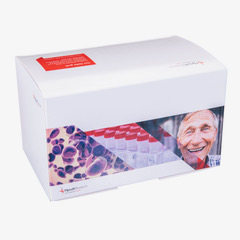
This SAP ELISA Kit is manufactured in Netherlands by Hycult Biotech.
| Size | |
| Sensitivity | 0.5 ng/mL |
| Dynamic Range | 0.2 – 50 ng/mL |
| Incubation Time | 3 hours 30 minutes |
| Sample Type | Serum, Plasma, Urine, CSF |
| Storage | 2-8°C |
| Alternative Names | SAP |
Related products