
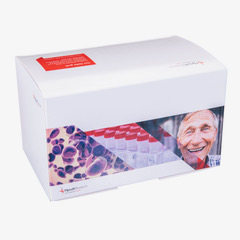

Rapid Fecal Calprotectin ELISA Kit
Calprotectin, also known as the S100A8/A9 heterocomplex, is a calcium- and zinc-binding protein complex formed by the S100A8 and S100A9 subunits, which have molecular weights of approximately 8 kDa and 14 kDa, respectively. Complex formation is calcium-dependent. Neutrophils are the primary source of calprotectin, although it is also expressed by monocytes, macrophages, and eosinophils in ileal tissue. S100A8 and S100A9 together account for approximately 40–60% of the soluble cytosolic protein content of granulocytes. Calprotectin exhibits antimicrobial, immunomodulatory, and antiproliferative activities, including antibacterial and antifungal effects. Elevated concentrations can be detected in various biological fluids, including plasma, synovial fluid, urine, and feces, reflecting its involvement in inflammatory processes.
In research settings, calprotectin is widely studied as a marker of neutrophil-driven inflammation. Fecal calprotectin concentrations reflect the migration of neutrophils into the gastrointestinal tract and the presence of inflammatory cells within the intestinal lumen. Because calprotectin remains relatively stable in fecal samples for several days, particularly when stored at 4°C, it is useful for investigating intestinal inflammation. Researchers use fecal calprotectin measurements to distinguish inflammatory conditions from non-inflammatory gastrointestinal disorders and to study the extent of intestinal inflammatory activity.
In clinical research, fecal calprotectin is an established biomarker for assessing intestinal inflammation and is particularly useful in the evaluation and monitoring of inflammatory bowel disease (IBD), including Crohn’s disease and ulcerative colitis. Higher concentrations have been reported in both adult and pediatric patients with IBD compared with individuals with irritable bowel syndrome (IBS) or healthy controls. Elevated fecal calprotectin indicates increased intestinal neutrophil activity and supports the presence of inflammation; however, it does not identify the underlying cause or specific type of inflammation. For assay measurement, the ELISA uses a single-incubation-step reaction. Following incubation, substrate is added to the wells, and the resulting color intensity is proportional to the amount of calprotectin in the sample. Concentrations are calculated using a standard curve generated with calibrated native calprotectin. Assay performance is monitored using high and low controls.
This Rapid Fecal Calprotectin ELISA Kit is manufactured in Netherlands by Hycult Biotech.
Related products