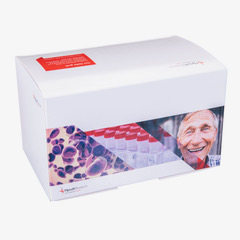

S100A7 ELISA Kit
S100A7, also known as psoriasin, is an approximately 11.4 kDa calcium-binding protein belonging to the S100 family. S100 proteins contain EF-hand calcium-binding motifs and participate in a variety of intracellular and extracellular processes, including calcium homeostasis, cell proliferation, differentiation, apoptosis, immune regulation, antimicrobial defense, and inflammation. S100A7 primarily functions as a homodimer and binds two zinc ions, which contribute to its structural stability and biological activity. As an antimicrobial protein, S100A7 helps protect epithelial surfaces by limiting the availability of essential metals, particularly zinc, required for microbial growth. Extracellular S100A7 can also function as a damage-associated molecular pattern (DAMP), interacting with the receptor for advanced glycation end products (RAGE) and promoting inflammatory signaling and neutrophil recruitment. S100A7 was initially identified through its elevated expression in keratinocytes affected by psoriasis and is now recognized as an important component of local innate immune defense in the skin.
In research settings, S100A7 measurement is used to investigate epithelial antimicrobial defense, inflammatory signaling, and skin immune responses. Researchers study its role in restricting bacterial growth, regulating neutrophil recruitment, and influencing interactions between epithelial cells and microorganisms. S100A7 expression is also investigated in inflammatory skin conditions, including psoriasis and atopic dermatitis, to better understand its contribution to epidermal inflammation and barrier function. Additionally, its involvement in cellular proliferation, migration, and tumor-associated signaling has made it relevant to cancer research, particularly studies involving breast cancer and squamous cell carcinoma.
In clinical research, S100A7 has been investigated as a potential biomarker of inflammatory skin conditions and tumor progression. Although initially associated with psoriasis, elevated S100A7 expression has also been observed in other dermatological conditions, including atopic dermatitis, limiting its specificity for any single disease. In cancer research, altered S100A7 expression has been associated with tumor development, progression, and potentially more aggressive cellular behavior in certain malignancies. These findings support continued investigation of S100A7 as a marker of epithelial inflammation and tumor biology, although its clinical significance requires further validation. For assay handling, gloves should be worn, and care should be taken to prevent skin flakes, hair, or other environmental contaminants from entering samples, as these may contribute to falsely elevated results.
This S100A7 ELISA Kit is manufactured in Netherlands by Hycult Biotech.
| Size | |
| Sensitivity | 0.4 ng/mL |
| Dynamic Range | 0.4 – 25 ng/mL |
| Incubation Time | 3 hours 30 minutes |
| Sample Type | Skin Wash Samples |
| Storage | 2-8°C |
| Alternative Names | Psoriasin |
Related products