
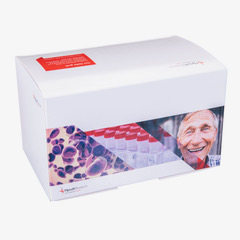

MBL ELISA Kit
Mannose-binding lectin (MBL) is a pattern recognition molecule and an important component of the innate immune system. It belongs to the collectin family of C-type lectins and contains a collagen-like region and a carbohydrate recognition domain (CRD), which enables it to recognize specific carbohydrates, including mannose and N-acetylglucosamine, on the surfaces of microorganisms. MBL circulates as oligomeric structures composed of identical 32 kDa polypeptide subunits and is produced primarily by hepatocytes. Upon binding to microbial surfaces, MBL activates the lectin pathway of the complement system through associated MBL-associated serine proteases (MASPs), initiating complement activation independently of antibodies and C1q. This pathway contributes to pathogen opsonization, inflammation, and microbial clearance.
In research settings, MBL is studied for its role in innate immune recognition, complement activation, and host defense against infection. Its ability to recognize microbial carbohydrates and initiate the lectin pathway makes it relevant to investigations of infectious diseases, complement deficiencies, and immune system function. Genetic variations in the MBL2 gene can influence circulating MBL concentrations and functional activity, with low levels potentially contributing to impaired opsonization and increased susceptibility to recurrent infections. Researchers also investigate MBL involvement in inflammatory and immune-mediated conditions, including systemic lupus erythematosus (SLE), rheumatoid arthritis, and cardiovascular disease.
In clinical research, MBL concentrations are investigated as potential indicators of innate immune function and susceptibility to infection, particularly in individuals with primary or secondary immunodeficiencies. Plasma MBL concentrations vary considerably, with reported levels ranging from approximately 10–5,000 ng/mL, and up to 12% of healthy Caucasian individuals having concentrations below 100 ng/mL. Altered MBL levels have also been investigated in association with cystic fibrosis, atherosclerosis, coronary heart disease, transplantation, and autoimmune disorders. However, MBL concentrations alone do not establish complement pathway functionality or diagnose these conditions. Accurate measurement is important for evaluating MBL levels, and specialized assay designs can minimize interference from classical pathway activation and anti-mannan antibodies.
This MBL ELISA Kit is manufactured in Netherlands by Hycult Biotech.
| Size | |
| Sensitivity | 0.41 ng/mL |
| Dynamic Range | 0.41 – 100 ng/mL |
| Incubation Time | 4 hours |
| Sample Type | Serum, Plasma, Cell Culture Supernatant |
| Storage | 2-8°C |
| Alternative Names | MBL |
Related products