
C5 ELISA Kit
Complement component 5 (C5) is a 190 kDa plasma glycoprotein and a central component of the complement system, which plays an important role in innate immune defense and the regulation of inflammation. C5 is activated through cleavage by C5 convertases generated by the classical, lectin, and alternative complement pathways, producing two fragments: C5a and C5b. C5a is a potent anaphylatoxin that promotes inflammation by stimulating immune cell recruitment and activation, while C5b initiates the terminal complement pathway by binding to C6, C7, C8, and C9 to form the membrane attack complex (MAC). The MAC creates pores in susceptible cell membranes, leading to cell lysis and contributing to the elimination of certain pathogens. Through these activities, C5 connects complement activation with inflammatory responses and direct antimicrobial defense.
In research settings, C5 is studied to investigate complement activation, inflammatory signaling, and the mechanisms underlying immune-mediated tissue injury. Researchers examine C5 cleavage and the generation of C5a and C5b to understand how complement activation contributes to immune cell recruitment, vascular inflammation, and MAC formation. C5 is also investigated in the context of interactions between innate and adaptive immunity, as complement activation can influence antigen presentation and immune cell responses. Its role in the terminal complement pathway makes it particularly relevant to studies of bacterial defense and complement-mediated cell damage.
In clinical research, C5 is investigated in several inflammatory, autoimmune, and complement-mediated conditions, including systemic lupus erythematosus, asthma, and multiple sclerosis. Dysregulated complement activation and excessive C5a or MAC formation may contribute to inflammation and tissue injury in these diseases. Genetic C5 deficiency can impair terminal complement activity and increase susceptibility to recurrent infections, particularly infections caused by Neisseria species. Because of its central role in complement activation, C5 is also an important therapeutic target in complement-mediated disorders. Measurement of C5 concentrations can support research into complement protein levels and regulation; however, C5 concentration alone does not necessarily reflect its activation or functional activity.
This C5 ELISA Kit is manufactured in Netherlands by Hycult Biotech.
| Size | |
| Sensitivity | 3.1 ng/mL |
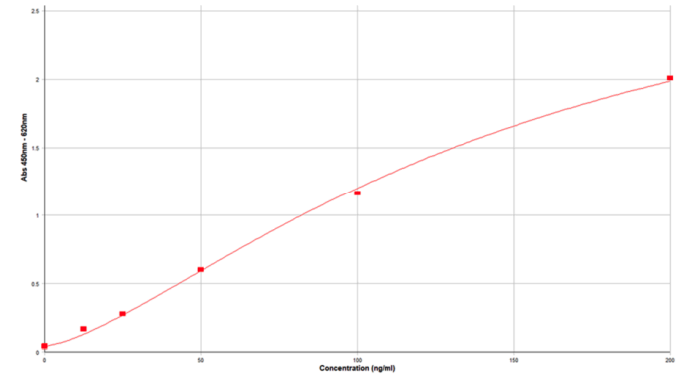
| Dynamic Range | 3.1 – 200 ng/mL |
| Incubation Time | 3 hours 30 minutes |
| Sample Type | Serum, Plasma |
| Storage | 2-8°C |
| Alternative Names | Complement C5 Protein |
Related products