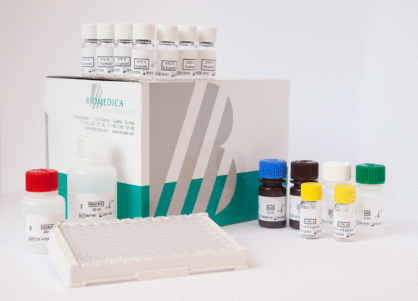

Thaumatin ELISA Kit
Thaumatin is a naturally occurring sweet-tasting protein originally isolated from the West African plant Thaumatococcus daniellii. Beyond its role as a food additive, thaumatin has been studied for its potential biological activities, including antifungal properties and interactions with cellular signaling pathways. Its structure and stability make it a useful model protein for biochemical and immunological studies. In biological systems, thaumatin does not naturally function as an endogenous human biomarker, but it can be applied in experimental settings to study protein detection, allergenicity, and immune responses.
Thaumatin ELISA (enzyme-linked immunosorbent assay) is used in research to quantify thaumatin levels in food products, dietary supplements, or experimental formulations. Researchers employ this assay to ensure quality control, study protein stability under different conditions, and evaluate potential immune responses in preclinical studies. ELISA provides a sensitive and specific method to detect even low concentrations of thaumatin, which is important for both safety assessments and functional studies.
In clinical or translational research contexts, thaumatin ELISAs are primarily used in studies investigating food allergies or immunogenicity of protein-based therapeutics. While thaumatin itself is not a diagnostic biomarker for human disease, its detection can help evaluate immune sensitization, monitor allergic responses, or validate exposure in experimental models. This makes the assay valuable for both regulatory testing and mechanistic research on protein interactions with the immune system.
This Thaumatin ELISA Kit is manufactured in by CellTrend GmbH.
| Size | |
| Sensitivity | |
| Dynamic Range | |
| Incubation Time | |
| Sample Type | |
| Storage | |
| Alternative Names | Thaumatine, T-Protein, and Thaumatin I/II. |
Related products