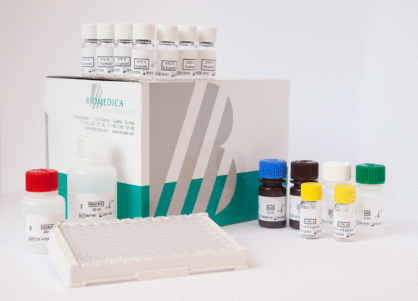

Rat tPA EIA Active ELISA Kit
Tissue-type plasminogen activator (tPA) is a serine protease that plays a critical role in the fibrinolytic system by converting plasminogen into plasmin, which then degrades fibrin clots. In rats, tPA is expressed in various tissues, including the endothelium, brain, and liver, and is involved not only in clot dissolution but also in processes such as tissue remodeling, neuronal plasticity, and wound healing. Measuring the active form of tPA provides direct insight into its functional role in physiological and pathological conditions, distinguishing it from total tPA levels that include inactive precursors.
The Rat tPA Active ELISA allows for the quantitative detection of enzymatically active tPA in tissue samples, plasma, or other biological fluids. In research settings, this assay is widely used to study the regulation of fibrinolysis, investigate stroke models, cardiovascular disease, and tissue repair mechanisms, as well as to assess the impact of pharmacological agents on tPA activity. It enables researchers to correlate active tPA levels with functional outcomes, providing a more precise understanding of proteolytic balance in experimental models.
In clinical and preclinical applications, monitoring active tPA can help evaluate therapeutic interventions aimed at modulating fibrinolytic activity, such as thrombolytic treatments for ischemic stroke or myocardial infarction. It can also be used to study disease states associated with impaired fibrinolysis or excessive clot formation, helping researchers and clinicians identify potential biomarkers for risk assessment, prognosis, or treatment efficacy.
This Rat tPA EIA Active ELISA Kit is manufactured in USA by Eagle Biosciences.
Related products