
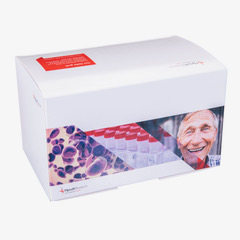

L-FABP ELISA Kit
Fatty acid-binding proteins (FABPs) are a family of small intracellular cytoplasmic proteins, approximately 13–14 kDa in size, that bind long-chain fatty acids and facilitate their intracellular transport, utilization, and metabolism. At least nine distinct FABP types have been identified, each exhibiting a characteristic pattern of tissue expression. These proteins play an important role in maintaining cellular lipid homeostasis by regulating the uptake, transport, and metabolism of fatty acids. Due to their small molecular size and cytoplasmic localization, FABPs can rapidly leak from damaged cells into the extracellular space and circulation following ischemic injury or cell necrosis. Liver-type fatty acid-binding protein (L-FABP), also known as FABP1, is predominantly expressed in hepatocytes and is encoded by the human FABP1 gene. Its tissue distribution and rapid release following cellular injury make it a useful marker for investigating liver cell damage.
In research settings, L-FABP is widely studied as a sensitive biomarker of hepatocellular injury and changes in liver function. Its rapid release from damaged hepatocytes makes it particularly useful for detecting early cellular injury before more extensive tissue damage becomes apparent. L-FABP measurements are used in vitro to investigate hepatocyte damage and rapid cell lysis, including in toxicology studies evaluating the effects of potentially hepatotoxic substances. It is also investigated in studies of liver transplantation to assess cellular injury occurring during and following the transplantation procedure. Because L-FABP can be measured in both blood and urine, researchers can investigate its release and clearance through different biological compartments.
In clinical research, L-FABP is investigated as a potential biomarker for the early detection and monitoring of liver injury, including damage associated with ischemia, drug-induced toxicity, and liver transplantation. Increased serum, plasma, or urinary concentrations may reflect hepatocyte damage and the release of intracellular L-FABP into circulation and other biological fluids. In healthy individuals, reported concentrations are approximately 12 ng/mL in serum or plasma and 16 ng/mL in urine, although levels may vary depending on the population and measurement method. These characteristics support the investigation of L-FABP as a sensitive marker of hepatocellular injury, although its clinical interpretation should consider other factors affecting liver damage and biomarker clearance.
This L-FABP ELISA Kit is manufactured in Netherlands by Hycult Biotech.
Related products