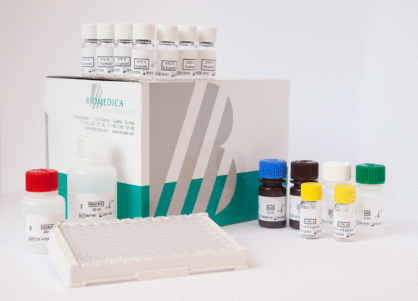

ASCA IgG ELISA Kit
Anti-Saccharomyces cerevisiae antibodies (ASCA) IgG are autoantibodies directed against components of the cell wall of Saccharomyces cerevisiae, a common commensal yeast. ASCA IgG reflects a systemic immune response to microbial antigens and is strongly associated with Crohn’s disease (CD), a subtype of inflammatory bowel disease (IBD). The presence of ASCA IgG suggests dysregulated intestinal immunity and impaired mucosal barrier function, which allows immune recognition of normally harmless microbial antigens. Elevated ASCA IgG levels are often correlated with more severe disease phenotypes, such as stricturing or penetrating Crohn’s disease.
In the clinical setting, ASCA IgG is used alongside ASCA IgA and p-ANCA to help differentiate Crohn’s disease from ulcerative colitis (UC), particularly in cases of indeterminate colitis. While not diagnostic on its own, ASCA IgG positivity strengthens the likelihood of Crohn’s disease, and higher titers may indicate an increased risk of complicated disease courses. ASCA IgG can also be useful in monitoring disease progression or in research studies evaluating patient subgroups with more aggressive disease.
In research, ASCA IgG serves as a biomarker for studying host-microbiome interactions, mucosal immune responses, and genetic susceptibility in Crohn’s disease. It is commonly used in longitudinal cohort studies to track seroconversion and predict disease onset in at-risk individuals, such as relatives of Crohn’s patients. Additionally, ASCA IgG is explored in mechanistic studies investigating the role of microbial antigens in triggering autoimmune intestinal inflammation and in trials assessing therapeutic interventions aimed at modulating immune responses in IBD.
This ASCA IgG ELISA Kit is manufactured in Germany by Medipan GmbH.
Related products