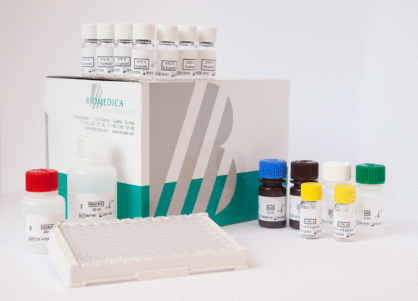
Hamster (CHO) RAN ELISA Kit
RAN (Ras-related Nuclear protein) is a small GTP-binding protein that plays a critical role in nucleocytoplasmic transport, mitotic spindle assembly, and cell cycle regulation. In mammalian cells, including Chinese Hamster Ovary (CHO) cells commonly used in research, RAN functions as a molecular switch, cycling between an active GTP-bound state and an inactive GDP-bound state. Its precise regulation is essential for proper cell division, nuclear transport of proteins and RNA, and maintenance of genomic stability. Dysregulation of RAN has been linked to aberrant cell proliferation, cancer progression, and other cellular dysfunctions, making it an important biomarker in both basic research and translational studies.
The RAN ELISA for hamster (CHO) cells enables sensitive and quantitative measurement of RAN protein levels in cell lysates or culture supernatants. In research applications, this assay is widely used to study the molecular mechanisms of cell cycle control, nuclear transport dynamics, and intracellular signaling pathways in CHO cells, which serve as a model for mammalian cellular processes. Additionally, it can be applied in the development and quality control of recombinant proteins, as RAN-mediated transport is critical for protein production in biopharmaceutical manufacturing.
Although RAN ELISA is primarily a research tool, its insights can have indirect clinical relevance. Understanding RAN expression and activity in mammalian cell models aids in elucidating disease mechanisms where cell proliferation and transport are dysregulated, such as cancer and neurodegenerative disorders. Furthermore, findings from CHO cell studies can inform therapeutic strategies targeting RAN or related pathways, supporting drug development and preclinical evaluation.
This Hamster (CHO) RAN ELISA Kit is manufactured in USA by Eagle Biosciences.
Related products