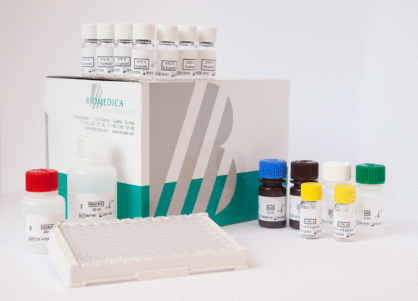

GABA ELISA Kit
Gamma-aminobutyric acid (GABA) is the primary inhibitory neurotransmitter in the central nervous system, where it plays a crucial role in balancing neuronal excitability. By counteracting excitatory catecholamines, GABA helps regulate stress responses, stabilize blood pressure, modulate appetite, reduce anxiety, and promote sleep. It is synthesized from glutamic acid—an excitatory neurotransmitter that also serves as a biochemical antagonist to GABA—highlighting the importance of maintaining proper balance between these signaling pathways.
Clinically, reduced GABA levels have been associated with several neurological and psychiatric conditions, including depression, autism, and hypertension. Measuring urinary GABA provides a noninvasive way to assess systemic or neurotransmitter-related imbalances, supporting diagnostic evaluation in disorders where inhibitory neurotransmission may be compromised. Urinary assessment is particularly valuable when central neurotransmitter shifts manifest in measurable metabolic changes at the peripheral level.
The GABA (urine) ELISA enables quantitative detection of free GABA in urine for in vitro diagnostic use. The assay can be performed manually or automated, serving as a practical laboratory tool to aid in identifying individuals with low GABA concentrations. Its use supports both clinical decision-making and research focused on neurotransmitter regulation, stress physiology, and neuropsychiatric disease mechanisms.
This GABA ELISA Kit is manufactured in USA by Immundiagnostik AG.
Related products