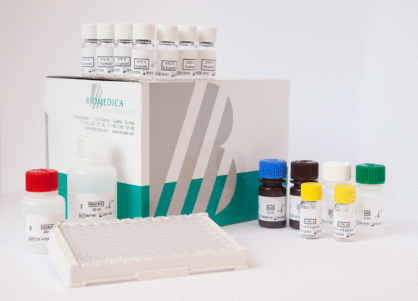
Dihydrotestosterone (DHT) ELISA Kit
Dihydrotestosterone (DHT) is a potent androgen synthesized from testosterone by the action of the enzyme 5α-reductase. It plays a critical role in the development and maintenance of male characteristics, including prostate growth, hair follicle regulation, and secondary sexual characteristics. Beyond its physiological functions, DHT is implicated in several pathological conditions, such as androgenic alopecia, benign prostatic hyperplasia, and prostate cancer. Due to its central role in androgen signaling, DHT serves as an important biomarker for assessing androgen activity and hormone-related disorders.
The DHT ELISA (enzyme-linked immunosorbent assay) is designed to quantitatively measure DHT concentrations in serum, plasma, or other biological fluids. In research settings, DHT ELISAs are commonly used to study androgen metabolism, investigate mechanisms underlying hormone-driven diseases, and evaluate the effects of drugs targeting androgen pathways. Researchers also use DHT measurements to explore its role in metabolic regulation, reproductive biology, and conditions influenced by hormonal imbalances.
Clinically, DHT ELISA is useful for diagnosing and monitoring disorders of androgen excess or deficiency. It can help assess patients with conditions such as polycystic ovary syndrome, androgenic alopecia, or prostate disorders, providing insight into hormonal imbalances that may guide treatment decisions. Additionally, DHT levels can be monitored during therapy with 5α-reductase inhibitors or other anti-androgen treatments to evaluate efficacy and adjust dosing, making it a valuable tool in personalized patient care.
This Dihydrotestosterone (DHT) ELISA Kit is manufactured in USA by Eagle Biosciences.
| Size | |
| Sensitivity | 17 pg/mL |
| Dynamic Range | 25–2500 pg/mL |
| Incubation Time | 2 hours |
| Sample Type | Serum |
| Storage | 2-8°C |
| Alternative Names | 5α-Dihydrotestosterone, 5α-DHT, Androstanolone, and Stanolone. |
Related products