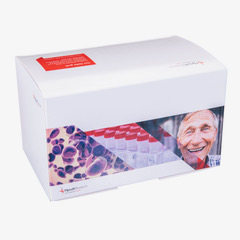

Collectin-10 ELISA Kit
Collectin-10 (CL-L1) is a soluble pattern recognition molecule involved in the lectin pathway of the complement system, an important component of innate immunity. Along with collectin-11 (CL-K1), collectin-10 recognizes carbohydrate structures and other molecular patterns associated with pathogens and damaged cells, including certain DNA structures. Both proteins can associate with mannose-binding lectin-associated serine proteases (MASPs), initiating lectin pathway activation and contributing to pathogen clearance and immune regulation. Collectin-10 belongs to the collectin family of proteins, which share a characteristic structure consisting of a collagen-like region, an alpha-helical neck domain, and a carbohydrate recognition domain (CRD). Its carbohydrate-binding activity is calcium-dependent, and it can form oligomeric structures either independently or in association with collectin-11. Although initially identified in hepatocytes, collectin-10 is also expressed in several other tissues, including the placenta, adrenal glands, lungs, small intestine, and prostate. It is encoded by the COLEC10 gene on chromosome 8 and circulates in blood in both individual and heteromeric forms with collectin-11.
In research settings, collectin-10 measurement is used to investigate lectin pathway activity, pattern recognition, and complement-mediated immune responses. Researchers study its interactions with collectin-11, MASPs, microbial carbohydrates, and damage-associated molecular patterns to better understand complement activation and host defense. Genetic variations in COLEC10 are also investigated for their potential effects on circulating collectin-10 concentrations and complement regulation. Quantitative measurement can further support studies examining changes in collectin-10 levels during infection, inflammation, and tissue injury.
In clinical research, altered collectin-10 concentrations have been investigated in association with systemic lupus erythematosus (SLE), kidney transplantation, acute liver failure, and liver cirrhosis. Studies have reported reduced circulating levels in some patients with SLE, while changes following kidney transplantation and during liver disease may reflect differences in complement regulation and inflammatory activity. Collectin-10 concentrations can also vary between serum and plasma and may fluctuate in response to microbial exposure and other physiological factors. These findings make collectin-10 a relevant biomarker for investigating lectin pathway regulation and disease-associated immune responses, although its clinical significance requires further evaluation and interpretation alongside other complement biomarkers.
This Collectin-10 ELISA Kit is manufactured in Netherlands by Hycult Biotech.
Related products